
Diagnostic Imaging and Objective Evidence for Personal Injury Attorneys
Personal injury attorneys rely heavily on medical documentation to support their cases. While witness statements, accident reports, and expert testimony all play a role in litigation, the medical record often becomes the foundation that determines how an injury claim is evaluated.
Clear, objective medical evidence helps establish the severity of an injury, demonstrate how it affects the patient, and support the connection between the accident and the resulting condition. When diagnostic findings clearly document the injury, cases tend to move forward more efficiently and with fewer disputes.
For this reason, understanding how modern diagnostic technologies work and how they can influence injury documentation has become increasingly important for attorneys working in personal injury law.
The Role of Medical Evidence in Injury Cases
In most personal injury cases, the medical record serves as the central source of objective evidence. Physicians evaluate the patient, order diagnostic studies, and document their findings in reports that may later be reviewed by insurance adjusters, opposing counsel, and medical experts.
These records help answer several key questions that often determine how a case progresses:
- What injury occurred?
- How severe is the injury?
- What caused the injury?
- What treatment is required?
- What long-term effects may exist?
Diagnostic imaging studies, such as X-rays, MRIs, and CT scans, are frequently used to help answer these questions. They provide visual evidence of structural injuries and help physicians confirm their clinical findings.
However, certain types of injuries can be more difficult to document using traditional imaging alone.

Why Some Injuries Are Difficult to Document
Many personal injury cases involve soft tissue damage rather than fractures or obvious structural trauma. Injuries involving ligaments, connective tissue, and spinal stability can sometimes be challenging to identify using static imaging methods.
Traditional diagnostic studies capture still images of the body. While these images are extremely useful for identifying many conditions, they may not always reveal how joints or vertebrae behave during movement.
In spine injuries, for example, instability between vertebrae can occur when ligaments are damaged during trauma. This type of instability may not always appear clearly on static MRI or X-ray images if the spine is being evaluated while the patient is lying still.
When diagnostic studies do not clearly identify the source of a patient’s symptoms, cases may sometimes be categorized as general “soft tissue injuries.” These cases can become more difficult to explain during settlement negotiations or litigation.
For attorneys, the availability of objective medical evidence can play a significant role in how an injury is evaluated by insurers or juries.

Advances in Motion-Based Diagnostic Technology
Medical imaging technology continues to evolve, and one area of advancement involves evaluating how the body moves rather than simply capturing still images.
Motion-based diagnostic systems analyze joint or spinal movement during controlled motion. By recording movement patterns and measuring alignment between bones, physicians can observe abnormalities that might not appear on traditional imaging.
In spinal injuries, motion analysis can help identify abnormal translation, angulation, or instability between vertebrae that may indicate ligament damage or trauma-related dysfunction.
Because these systems measure movement with precise quantitative data, they can provide physicians with objective measurements rather than subjective observations alone.
This type of diagnostic data can become a valuable component of medical documentation in injury cases.
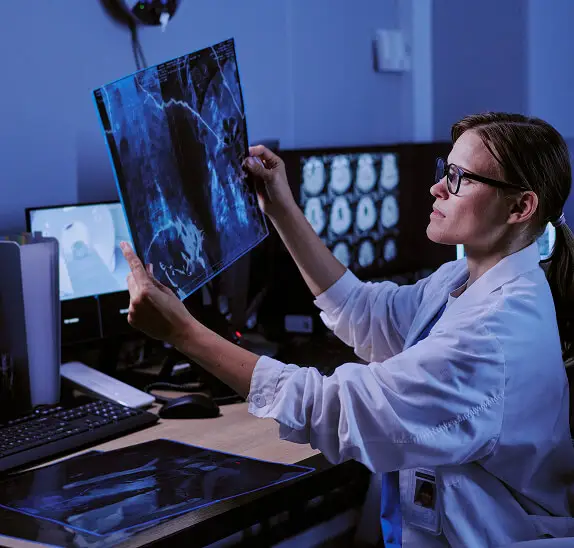
Motion Imaging and Spine Injury Documentation
One example of motion-based spinal diagnostic technology is Vertebral Motion Analysis (VMA®).
VMA® uses dynamic imaging to record the spine in motion, allowing physicians to observe how vertebrae move relative to one another during controlled movement. By analyzing these movements, the system can measure translation, angulation, and other indicators of instability that may be associated with ligament injury.
Unlike traditional flexion and extension X-rays that capture only a few static positions, dynamic motion analysis records continuous movement of the spine. This allows physicians to evaluate motion patterns throughout the entire range of movement.
For attorneys reviewing medical documentation, studies like these can sometimes provide additional clarity when traditional imaging does not fully explain a patient’s symptoms.
It is important to note that motion-based diagnostics are typically used alongside traditional imaging rather than replacing it. MRI and other imaging modalities remain essential tools for evaluating structural injuries.
However, motion analysis can provide additional information that may help physicians better understand certain types of trauma-related spine injuries.

Why Objective Medical Data Matters in Litigation
Personal injury cases often involve competing interpretations of medical evidence. Insurance carriers and defense experts may challenge the severity of injuries or question whether the condition is related to the accident.
When diagnostic findings are clear and supported by objective measurements, they can strengthen the medical narrative presented in the case.
Objective data may help:
- Clarify the nature of the injury
- Support physician testimony
- Demonstrate measurable abnormalities
Provide additional documentation for impairment ratings or treatment decisions
For attorneys, understanding how diagnostic technologies work can help in evaluating the strength of medical evidence within a case.
While every case is unique, the presence of clear medical documentation often plays a significant role in how injury claims are resolved.

The Future of Diagnostic Evidence in Personal Injury Law
As medical technology advances, the role of objective diagnostic evidence in personal injury litigation is likely to continue expanding.
Physicians increasingly rely on technologies that provide measurable data rather than purely descriptive findings. This trend aligns with broader developments in medicine that emphasize evidence-based diagnosis and documentation.
For personal injury attorneys, staying informed about emerging diagnostic technologies can provide valuable insight into how injuries are evaluated and documented within the medical record.
Ultimately, stronger medical documentation helps clarify the nature of an injury and supports the legal process by providing objective evidence that can be evaluated by physicians, insurers, and the courts.
